Effective Feeding
Signs of Effective Breast/Chestfeeding
- Baby is feeding at least 8 times in 24 hours
- Baby has at least 6 wet diapers every 24 hours
- Your breasts feel softer after feeding
- Your nipples are not painful
Breast/chestfeeding is the process of feeding an infant human milk either directly from the breast/chest or by expressing (pumping out) the milk from the breast/chest and bottle-feeding it to the infant.
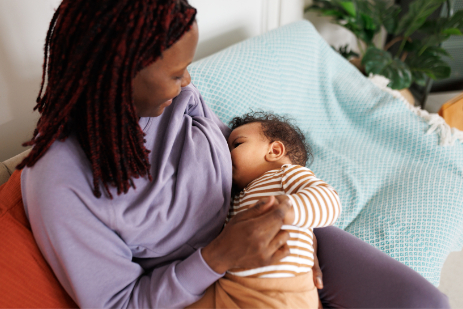
Human milk provides complete infant nutrition while supporting the long-term health of both parent and child.
Research has shown that breast/chestfeeding can reduce the risk of infectious diseases, childhood leukemia, obesity, and Sudden Infant Death Syndrome (SIDS). Nursing parents also experience lower rates of certain cancers, Type 2 Diabetes, and High Blood Pressure.
The American Academy of Pediatrics (AAP) recommends exclusive breastfeeding for six months followed by continued breastfeeding with complementary foods for at least two years and beyond as mutually desired for the best health outcomes. [1]
Watch short demonstrations of common breast/chestfeeding positions and learn techniques that can help improve comfort, support a deeper latch, and make feeding easier for both you and your baby.
Learn proper positioning and support techniques.
Also known as the "clutch hold position".
Comfortable reclined feeding position demonstration.
Learn how to breast/chestfeed while lying on your side.
A comfortable, secure position allows your baby to use their instincts to latch deeply onto the breast. With a good latch your baby takes in a large mouthful of breast tissue. This gently stretches your nipple to the back of their mouth.
When this happens, the baby is able to effectively remove the milk. A deep latch ensures that your baby gets plenty of milk and your body gets the message to keep making more.
Explore trusted local, statewide, and national resources for lactation support, family services, breastfeeding rights, medication safety, and community education.
Join free or low-cost classes, support groups, and community events designed to help parents, families, and caregivers feel confident with breast/chestfeeding.
Note: Starred events indicate Los Angeles County Department of Public Health Maternal, Child, and Adolescent Health (MCAH) involvement or that one or more MCAH representatives will be present.
We’re here to help connect families with information, support, and local resources. Send us a message and a team member will follow up with you.
The terms breast and chest are used to be inclusive of all pregnant people who plan to feed their baby by providing their human milk.
Los Angeles County Department of Public Health uses the terms “breastfeeding” and “chestfeeding” interchangeably to describe the action of feeding an infant human milk. The term “chestfeeding” is intentionally offered as an alternate term for lactating persons that prefer not to use the term “breast” when referring to their own bodies. We use gender inclusive language because chest/breastfeeding and lactation rights apply to everyone.