
Why vaccinate dogs and cats?
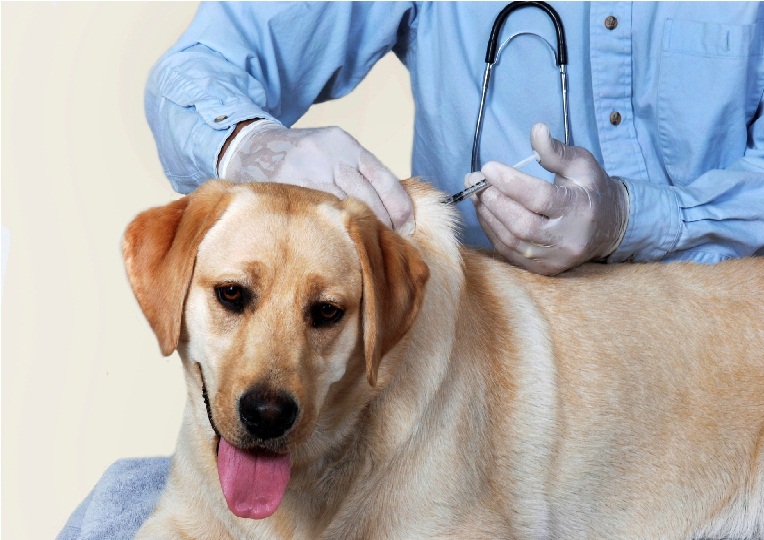
Just like in people, vaccines are a core part of preventive care for all dogs and cats. Vaccination reduces illness severity and can protect pets from diseases—some of which can also be transmitted to people. Preventing disease helps families avoid costly care and stress that often can be prevented.
Key vaccine-preventable diseases we track include rabies, leptospirosis (lepto), and distemper.
Facts in Los Angeles County
Parvo
- Causes vomiting, dehydration, and bloody diarrhea; can be deadly—especially in puppies.
- Virus survives a long time in the environment; unvaccinated dogs can get sick long after an infected dog is gone.
- Puppies need a full vaccine series (typically 3–4 shots until adulthood—ask your veterinarian for the right schedule).
Rabies
- Rabies is fatal and can infect people. Widespread pet vaccination led to elimination of local dog rabies (the virus still exists in bats).
- If a wild animal bites a pet that isn’t vaccinated, quarantine is typically 6 months. If current on rabies vaccine, quarantine is reduced to about 30 days.
What you can do
- If your pet isn’t vaccinated, keep them away from other animals and high-traffic pet areas (e.g., dog parks) until protected.
- Consult your veterinarian to determine which vaccines your dog or cat needs and how often boosters are due.
What Public Health is doing
We work to ensure pet owners have access to preventive services across LA County.
Pet expos & services: With local partners, we host and join community events offering low-cost or free vaccines, spay/neuter, and more—plus connections to ongoing care resources.
Low-cost Vaccine Resources
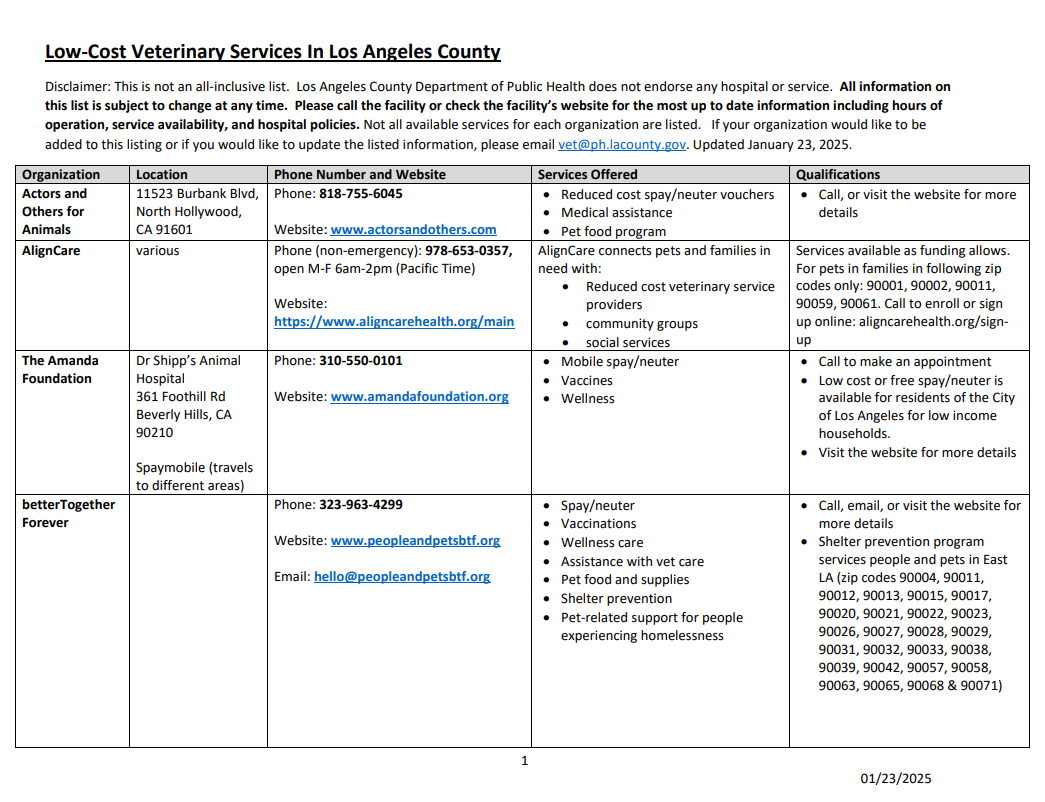
Low-Cost Veterinary Services (LA County)
Includes vaccine providers
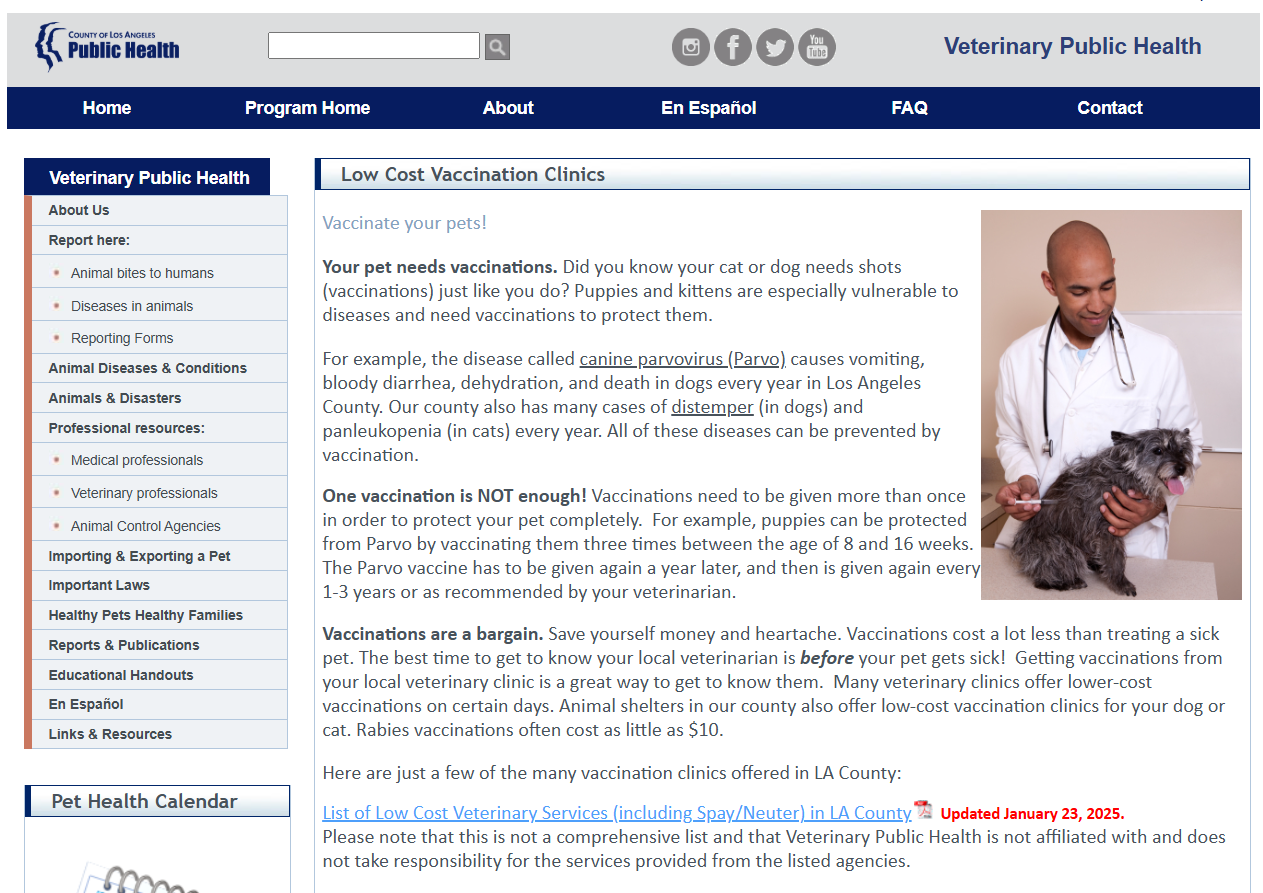
Local Low-Cost Vaccination Clinics
More resources
Last updated: September 2025