
Why spay & neuter?
Spaying (females) and neutering (males) sterilizes pets so they cannot have litters. There is evidence that sterilized pets live longer and may experience other health benefits, such as a lower risk of certain cancers and infections.
Spay/neuter also helps reduce pet overpopulation in Los Angeles County, where shelters can be overwhelmed by unwanted animals. In 2010, more than 110,000 unwanted dogs entered County shelters, and many dogs and cats arrive intact (not sterilized).
Experts estimate there are between 1.5 and 4 million feral or stray cats in LA County. While most pet owners agree spay/neuter is important, not all pets are sterilized. Increasing access to services remains essential.
Spay/neuter also reduces common risks for pets:
- Lower risk of roaming and car injuries
- Reduced biting behaviors
- Decreased chances of certain cancers and infections

What you can do
- Spay & neuter your pets.
- Talk to your veterinarian about the procedure (pre-op bloodwork, anesthesia monitoring, recovery).
- Ask your local animal shelter about low-cost options in your area.
- Keep pets safely confined to your property; roaming intact pets can lead to unwanted litters.
Video: Spaying & Neutering: The Responsible Thing to Do (AVMA)
What Public Health is doing
The HPHF coalition works with partners to improve access to spay/neuter services—especially in communities with more stray animals.
Pet expos & services: At community events, residents can access low-cost or free preventive services such as spay/neuter and vaccinations, and get connected to ongoing local resources.
Low-cost spay & neuter services
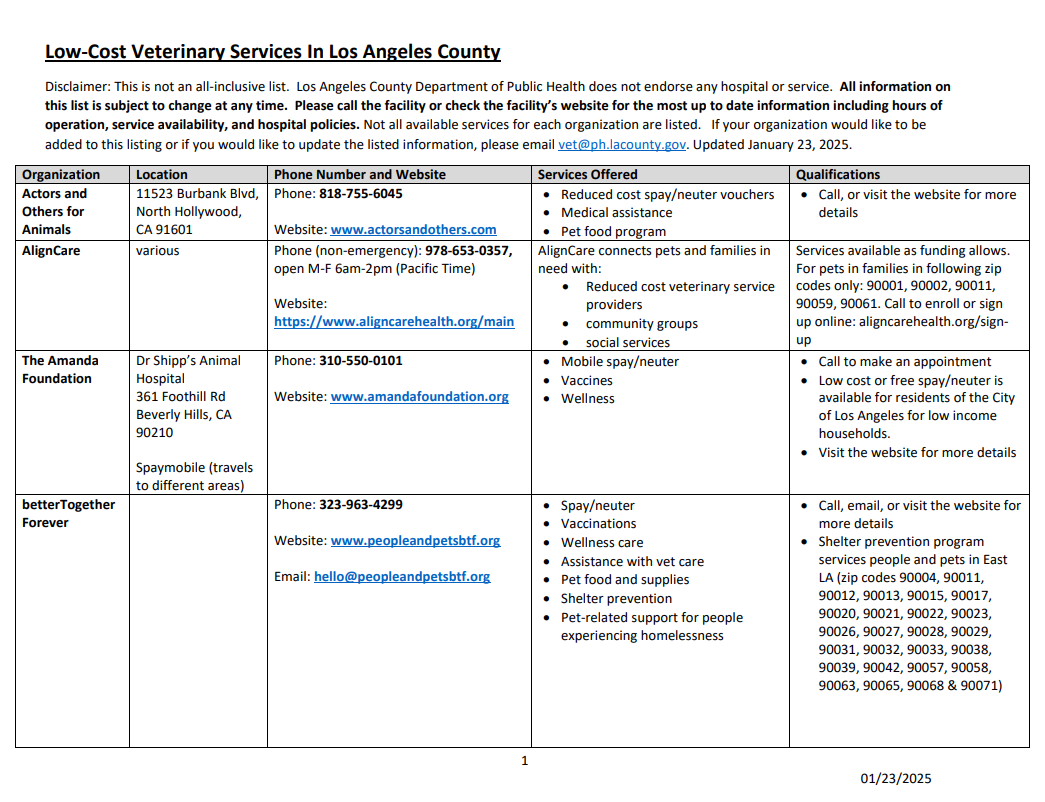
Low-Cost Veterinary Services (LA County)
Includes spay/neuter providers
Find a Low-Cost Clinic Near You
Michelson Found Animals
Regional providers & programs
- LA County Animal
Care & Control (LACDACC): Spay/Neuter
- Spay & Neuter Discount Vouchers (accepted at participating agencies)
- More info: (562) 940-6808
- ASPCA Los Angeles — Free spay/neuter for eligible City/County residents; stationary clinic at Chesterfield Square and mobile clinics in Baldwin Park & Downey.
- San Gabriel Valley Humane Society — Low-cost spay/neuter by appointment; proof of vaccinations required. (626) 286-1159.
- Inland Valley Humane Society — Low-cost spay/neuter; appointments made in person Mon–Fri, 9am–12pm.
- Spay4LA — Mobile clinic; free services for qualifying LA County/City zip codes in South LA. Call 1-888-SPAY-4-LA.
- City of Los Angeles Animal Services — Free certificates & discount coupons; info at link or (888) 452-7381.
- Long Beach Animal Care Services — Spay/neuter vouchers (limited). (562) 570-7387. Fix Long Beach mobile clinic.
- Pasadena Humane Society — Low-cost spay/neuter; schedule online.
- SEAACA — Spay/neuter info and services.
- Contact your local animal control agency for more information. Full list: LA County Animal Control Agencies.
Pet owners: licensing
Last updated: September 2025